
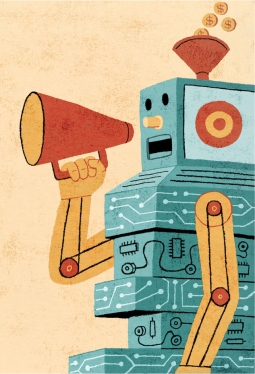
Going Native

Native advertising.

Everyone’s talking about it, but what is it, exactly? It has something to do with ads that don’t look like ads, but rather provide a degree of value in terms of being content. In that sense, native advertising is certainly a form of converged media as it combines paid media (advertising) with owned media (content) – often with the goal of generating earned media (social interaction, UGC, etc.).

Yet brands have been paying publishers to run their own content since forever. Does that mean “native advertising” simply a neologism for what we used to call advertorial? Or branded content? Maybe it’s sponsored content?

If native advertising somehow differs from older models of advertorial, sponsored or branded content, where are the lines drawn? Does “native” necessitate some sort of technological framework to carry and/or distribute the content in question (à la products offered by The New York Times, or tech start-ups such as OneSpot or inPowered)? Does it mean a publisher’s in-house agency (think Buzzfeed, Gawker Media) was commissioned to come up with the creative?

Bottom line: The term “native advertising” raises more questions than it does answers.

The value proposition of native advertising is, however, clear in a digital environment of banner blindness and plunging clickthrough rates. Pre-roll ads are skipped or ignored, email subscriber rates are eroding. Given any kind of choice, consumers are saying a clear “no” to interruptive advertising.

Native advertising lies somewhere in bridging the divide between content marketing – a pull strategy – and plain, old fashioned advertising, which is interruptive. Somewhere in its definition is probably the fact of paying for space or time (the “advertising” part) is a fashion that’s “native,” i.e. organic, conducive to the user experience, non-salesy, and offers some sort of value in and of itself as an ad (entertainment, education, utility, for example).

Native advertising’s promise, therefore, is better performing ads – but only if metrics are defined that are “native” to “native.” DM goals likely don’t apply in this case. Highly customized ad solutions mean more revenue for publishers (and boy, can they use it now). Also, deeper creative engagements for agencies, and hopefully, a better user experience for consumers.

The fly in the ointment is that without a real definition of native advertising, it means anything you want it to mean. Or anything whoever’s trying to sell it to you wants it to mean. Confusion in the marketplace is not a good thing (though it can benefit certain constituents).

This is why, as a research analyst, my next project will be to define native advertising, as well as to map the landscape of products and technologies related to the practice. (I’m also part of an IAB taskforce that will work to define the term – it’s therefore important to note the research will be my own work, not that of a committee.)

As this project is just kicking off, I’d love to invite your input. What do you believe native advertising is? Isn’t? What are the important companies in the space? Please let me know, either via email or in the comments section.

I’ll report back soon. Watch this space!

A version of this post originally published on iMedia Connection

Image creditwww.bydewey.com

Technorati Tags: , , , ,

Six Emerging Content Marketing Trends

Three related, clustered events constitute a trend. So, what have we here?

  • February 25: Mindshare appoints a content chief
  • February 27: Edelman names (a new, digital-focused) chief content officer
  • February 27: Facebook announces a content strategy fellowship
  • March 25: Sequoia Capital appoints a head of content
  • March 26: Houghton Mifflin Harcourt names its first chief content officer
  • March 27: Weber Shandwick launches a content marketing unit with 100 staffers
  • April 1: Havas signs a global chief content officer

Chief content officers have been de rigeur in media companies for years. Editorial web sites, magazines, newspapers, and broadcasters have them. Even Netflix boasts a chief content officer.

What’s staggering now is the alacrity with which agencies are now piling into the white-hot content marketing space. Not all of this is new, of course. Content divisions and/or practices have existed for some time at major players such as Leo Burnett, Ogilvy, and OMD. Digital shops, too, have content heads, as do (of course) the small cohort of content-only agencies.

The appointments above reveal these interesting takeaways:

Agencies that don’t have content practices are scrambling to get into the game

From the appointment of an executive with “content” in his/her title to blowing out an entire new division, both ad and PR agencies realize content can no longer be ignored. Clients expect content-related services and advisory. While mileage on the revenue models varies radically, there’s also heated competition on the PR and ad sides for a piece of the content pie. “We’re in a dogfight with the ad agencies,” is how one PR executive put it to me in a private meeting.

Content’s meaning is increasingly (if not almost exclusively) digital

It’s not as if Edelman didn’t have a content officer before appointing Steve Rubel to the role. His predecessor, Richard Sambrook, a former BBC editor, focused on editorial development. Rubel’s purview will be much broader, focusing on relationships both with digital media properties and technology vendors.

PR shops are in the media buying business

Historically, PR firms never, ever bought media. They earned it. In announcing their new content initiatives, both Weber Shandwick and Edelman have stressed that media buying and other forms of brokering will be very much part of what they do going forward. Media convergence and native advertising models make this evolution imperative.

Content is essential for startups

When one of the leading venture capital firms appoints a content head to help its portfolio companies develop and improve their blogs, social media, and video, it underscores just how essential a well-executed content strategy is to success — or failure — in business.

Hire-a-journalist: Will it suffice?

For the past several years, “hire a reporter” has been the mantra of companies eager to get a leg up in blogging or on social media channels. Now that content strategies are more technologically complex and digitally convoluted (converged media, native advertising, video, mobile) than “just writing,” it will be interesting to see what skillsets the next crop of content hires possess.

“Global” appended to content titles

This trend will become increasingly important with holding companies and larger agencies. Brands, too, are beginning to make content hires and shuffle the org chart to accommodate content strategy and execution. One of the biggest content challenges is the one facing large, multinational enterprises that must create content for a wide range of countries, languages, territories, audiences, and products. If any single cohort relies on outside content support, it’s multinationals. Holding companies possess on-the-ground global support and know that coordinated efforts can be a boon to this important new line of business.

This post originally published on iMedia Connection

Technorati Tags: , , , , ,

The End of “Digital” & “Social” Media


Oreo Super Bowl tweet

“Digital media” will soon be a redundant term. Increasingly, all media are digital. Once a term reserved for the internet only, “digital” now embraces your phone, television, more and more “print” media (ereaders and tablets), radio, and out-of-home channels such as in-store kiosks and digital signage.

“Social media” is another term that is rapidly approaching the tautological.  The more media are digital the more they’re social, either inherently or increasingly, linked into a myriad of social networks and social applications that facilitate sharing, commentary and discovery.

Media is driving social, and social is driving media. This is as true offline as it is on the web. Consider, for example, Twitter’s recent acquisition of social TV analytics firm Bluefin Labs. Then there’s the recently launched UK channel, 4Seven that only broadcasts the programming that has proven to be the most socially popular with viewers (http://adage.com/article/global-news/u-k-channel-air-shows-social-media-buzz/235245/). Each program is introduced by a broadcast of viewer comments about the show, positive and negative.

Brands and media organizations must adapt to meet consumers anywhere they might be – at any given moment – on the dynamic customer journey. Consumers flit between screens, devices and channels like so many hummingbirds.  Messaging will slip between the cracks if it doesn’t have hooks into social, into real (or near-real) time, and if it isn’t as multichannel as its intended audience.

Read the rest of this post on iMedia, where it originally published as a column.

Technorati Tags: , , , , ,

First Media Disruption of the Year: Samsung + AP + Twitter

sponsored samsung tweetsEven when you know what’s coming, you never know exactly what’s coming.

Paid, owned and earned media are converging, sure. As a result, workflow and roles are changing radically. But even when you’ve been watching this space microscopically for many months, the next manifestation to come down the pike is almost always a surprise.

The first surprise of this year is a stunning example of how quickly media convergence is moving, and how rapidly roles and workflow are changing. Last week, during CES, Samsung paid the Associated Press to run sponsored tweets in the AP’s Twitter feed.

And the “media buy” was brokered not by a media buying (advertising/paid media) agency, but by Edelman, Samsung’s PR agency (earned media – or make that paid/earned media?).

[Disclosure: Edelman is a client of my employer, Altimeter Group]

By definition, PR agencies don’t buy media, right? Just a couple of weeks ago I was talking with the New York Times about Ricochet. Many of the initial campaign results are truly impressive, but since the product involves “buying” New York Times content (not just ad units), the market is confused. Media buyers are calling it a PR product. PR is saying if it’s a buy, then it’s a media buy.

Digital silos, a new twist on that classic waiter’s line, “Sorry, but this isn’t my table.”

Disruption Across the Board

A PR agency functioning as media buyer isn’t the only radical shift in this bold experiment. For as long as there’s been publishing, it’s been pretty much the rule that the publisher sells advertising on his own media property. Now, while Twitter can arguably be defined as owned media because AP controls what’s on their feed, with this campaign they are selling sponsorships on Twitter – and Twitter doesn’t get a cut of the revenue.

Precedent? And how. As Carree Syrek of Kinetic-Social put it to Adweek, “What if Target or Walmart want to start charging CPGs like Procter & Gamble for Foursquare ads? Will the social media platforms allow brands to leverage those properties twice without having to [pay]? Will they let them essentially double dip?”

Twitter’s letting this one go, for now, despite the fact it pulls a U-turn around Twitter’s own ad product. All parties were quick to point out the sponsored tweets weren’t automated and otherwise complied with Twitter’s sponsored tweet guidelines.

Pushback? Some, which is to be expected. Criticism came both from users (a handful) and a few media observers, who worried the move blurred the lines between breaking news and pay-to-play content.

But very much to Samsung’s credit, the sponsored tweets, limited to a very modest two per day for the five-day duration of CES (so 10 tweets in total) were very clearly marked “SPONSORED TWEET.”

Edelman’s EVP/Global Strategy and Insights Steve Rubel has blogged articulately about how his firm reached the bold decision to venture into paid media, where few, if any, PR firms have gone before. The post is worth a read.

Steve and I carried on a conversation (on Twitter, over DM of course) about the campaign. No word from him on the specific goals of the undertaking, the applied metrics or results (in his defense, it was ongoing when I asked).

Like him, I believe this type of campaign is a glimpse into the future in which brands partner with the media companies they formerly ‘just’ advertised with. There are opportunities for native advertising, curation, sponsorship, creation and more.

Is there a revenue model behind this that can sustain media companies, particularly as their traditional ad revenues continue to erode? That’s the question.

In the meantime, it’s important to note Samsung’s sponsored tweets in AP’s Twitter feed very thoroughly satisfied one campaign goal that’s very squarely in Edelman’s wheelhouse: it drove a ton of (earned) media coverage.

This post first published as a column on iMedia

Technorati Tags: , , , , , , ,

Why the Future of Mobile Advertising is Native Advertising

reading-mobile-deviceOne reason it’s so hard to pin down mobile advertising is due to the fact that “mobile” is quite possibly the most imprecise term there is when it comes to adverting and media. Tablet? Yes. Phone? Indeed. E-reader? Laptop? Phablet? Sure. Also, that must-have thing that’s coming down the pike next.

The sizes, functions and purposes of a multiplicity of mobile devices vary greatly, meaning there literally cannot be a one-size-fits-all solution to mobile advertising. However is there is one universal truth about mobile, that will hold as true in the future as it does today, it’s that real estate is limited on mobile screens – much more so than on other digital devices. And that’s what’s limiting mobile advertising.

Mary Meeker’s most recent state of the internet presentation proffered the much-cited statistic that ten percent of media consumption now occurs on mobile devices, yet mobile commands a scant one percent of digital revenues. Yes, this is where internet display advertising once languished, back in the day. Eventually things evened out.

Will mobile advertising repeat the pattern? Don’t be so certain that straight display advertising will ever gain the traction on mobile devices that it enjoys on devices connected to monitors and other, larger screens.

Disparate as the world of mobile hardware is, all mobile devices are linked by a common factor: real estate is scarce. Display advertising on mobile screens is proportionately more intrusive, annoying and unwelcome.

The “year of mobile” we’ve been talking about for more than a decade has surely arrived already (heck, an estimated 17.4 million iOS and Android devices were activated this past Christmas day alone). But the year of mobile advertising? It’s still a ways away.

What we’re waiting for is the rapidly growing trend of native advertising to spread more effectively to mobile devices and platforms, and we’re not there yet. Currently, most forms of branded content as advertising occur on publisher sites that help to create them (think Buzzfeed, New York Times, Boston Globe, Gawker Media). Technology from companies such as OneSpot and InPowered that pushes relevant, branded content into ad units are pretty nascent on the internet and don’t yet have mobile strategies. Facebook (as everyone knows) is working on the issue. Some have posited large-scale mobile players such as Samsung and Yahoo may tackle mobile native advertising this year.

In other words, hurry up and wait.

Will 2013 finally be the year of mobile advertising? I don’t think so, but that long-awaited era may be on the horizon. The solution to ads on mobile devices that consumers accept and value (as opposed to the 50 percent of clicks on mobile ads purely attributable to “oops“) will be content, not advertising driven.


Technorati Tags: , , , , , , , ,

Digital Marketing & Media: What to Watch in 2013

Predictions can be fascinating, but let’s face it. No one I know is in possession of a working crystal ball, and digital marketing and technology move way too quickly and too erratically to do much more than keep us guessing (not crystal-ballthat that isn’t half the fun).

I’m an analyst, not a psychic. So rather than play the “what’s next?” guessing game, let’s instead focus on “what’s important?”

These are the areas I plan to keep a close eye on in 2013. What would you add — or subtract — from this list?

1. Media Convergence The blending of paid, owned and earned media will continue and intensify in 2013 spawning new technological solutions, necessitating new skills, new workflow systems and new partnerships. As the lines continue to blur between what’s paid, owned and earned in digital (and soon, traditional) media, this will be the trend that governs nearly all other major change in the digital marketing and media landscape.

2. Native advertising Between banner blindness and the fact that display, search and social advertising has largely moved toward programmatic buys that are much less profitable for publishers, we’re seeing a number of technologies and solutions emerge to facilitate native advertising, one of many terms for plonking content (often, unbranded content) into ad units (a manifestation of media convergence). Products and solutions in this area will continue to emerge, more publishers will accommodate it, and no doubt we’ll see some interesting, large-scale media partnerships emerge as a result.

3. Demand for broader skills and tighter workflows will intensify intensifies Looping back again to media convergence, the increasing overlap between paid, owned and earned channels is creating a demand to bring in new skills and more closely integrate workflows within disciplines. Take PR, for example. Traditionally, public relations has specialized in owned (content) and earned (in the sense of traditional) media. Throw in native advertising and suddenly PR agencies are faced with the prospect of media buying, a skill that’s always been the exclusive domain of advertising agencies.

And with media buying come other skills such as media optimization and analysis. Put otherwise, digital, which has become increasingly siloed and Balkanized in recent years, will no longer be able to pull the “that’s not my table” routine. All players must develop an understanding of related digital channels (search, social, email, analytics), as well as come together around a table and really, truly play as a team.

4. Real-time marketing & listening platforms Real-time marketing demonstrably works — not just in social channels, but across the marketing spectrum. A recent GolinHarris study finds real-time not only positively impacts standard marketing goals — word-of-mouth, attention, preference, likelihood to try or buy — but it also turbocharges other marketing initiatives, including paid and owned media effectiveness. Event- and news-driven marketing will become increasingly vital as brands work to become more relevant. This requires sophisticated listening and monitoring platforms, and often 24/7 staffing. Teams require tools, and training to respond in accordance with social media policies and in the brand’s voice. They must also be permitted to work in an agile environment, free of the chain-of-approval strictures that are antithetical to real-time marketing.

5. Organizing for content marketing & content strategy As brands recognize the necessity of adding content to the marketing mix, they quickly realize something else. Precious few organizations have a Content Division. In 2013 brands will begin to address this deficiency in earnest. They will hire, reorganize and make room on the org chart for effective content marketing operations that work in concert with existing marketing functions from social to communications to brand, creative and advertising.

6. Visual information takes precedence Research I published in early 2012 demonstrates that when marketers are asked what kind of content they’ll be investing in going forward, anything visual takes precedence over the written word. The unfettered growth of Pinterest, infographics, Instagram, and Tumblr, not to mention the always-growing popularity on online video, bears this out. Visuals capture attention. In a world in which brand messages clamor for consumer attention across screens, devices and channels, a picture is worth the proverbial thousand words. Keep your eyes open in 2013. It’s going to be a colorful and visually arresting year.

7. Online/offline channels converge, i.e. everything becomes more digital As media become more digital, we’re seeing digital messages appear in new places: out-of-home channels such as billboards and digital signage, as well as TV screens, are hosting streaming and social media.

The above are my top seven, but I’ll be keeping an eye on some other trends next year. Mobile is always changing rapidly, gamification is developing and interesting, so is wrangling and making sense of big data.

The single most interesting trend in 2013? Easy. It’s the one we don’t even know about yet.

Technorati Tags: , , , ,

Online Targeting: Perhaps Privacy Isn’t the Problem

Composite Portrait by Pelle Cass

Composite Portrait by Pelle Cass

Some “facts” you might not know about me, particularly if you’re going by the picture on the upper right hand side of this page.

I’m a married male head of household who speaks Spanish. I have two teenage children and a high school diploma.  I’m retired. My income is below $50,000. I’ve recently purchased luxury cars and cruises. I have only one interest: sports. I’m in-market for every type of car you can think of: economy, compact, luxury sedan, full-size SUV and a motorcycle!

Other purchases I’m considering: magazines, theme park tickets, auto parts and accessories, and men’s clothing.

That, at least, is who a major real-time bidding platform thinks I am, based on several years of browsing history.

I have never wiped my cookies.

Here are the more factual facts: I’m a single, childless, working woman who has owned only one vehicle (over two decades ago, not in the U.S.). I haven’t watched or participated in a sport event since gym ceased to be mandatory. Cruises? Once, in 1983. Last theme park visit: 1971.

With zero effort on my part and many years of data, my online profile is even more wrong than Jeffrey Rosen’s two deliberately falsified online identities, created for a feature in Sunday’s New York Times Magazine

The piece is an indictment of real time bidding (which the author occasionally conflates with retargeting, which is something completely different) and, by extension, online targeting. While Rosen mentions, almost in passing, that this (erroneous) collected data is anonymous, he nevertheless sounds the alarm about “obvious privacy concerns” because “computers can link our digital profiles with our real identities so precisely that it will soon be hard to claim that the profiles are anonymous in any meaningful sense.” Big data, he maintains, will effectively provide advertisers with your DNA map once they triangulate your email font with your shirt color and driving habits.

Do Not Track aside, this despite the fact that virtually everything – everything – in my BlueKai profile is false, excepting the fact that I do live in the New York State/Northern New Jersey area – which hardly takes a bloodhound to figure out.

In other words, there’s indeed a problem with digital advertising. If ad platforms aren’t delivering the targeting that advertisers are paying for, the emperor has no clothes.

More perplexing than Rosen’s indictment of real-time platforms for violating privacy (while, apparently, not even knowing such basics as the gender of the otherwise anonymous person whose privacy they’re purportedly violating), he goes on to lament the erosion, of all things, of our individuality as a result of receiving targeted ads.

It’s a strange logic:

‘“You might find that people who have a luxury car tend to have a high propensity to buy some kind of biking gear, so a person who expresses a high preference for luxury cars might be a good target for biking gear, even though they don’t yet bike.” But this leaves no possibility for individuality, eccentricity or the possibility of developing tastes and preferences that differ from those of people you superficially resemble.”

Waitaminnit. Who suffers if I’m served with an ad for a bike because it’s falsely assumed I own a luxury car? Everyone on the equation but me is negatively impacted: the advertiser pays for a useless impression; the bidding platform’s credibility is damaged; and the publisher, already getting lower rates for running this type of advertising, risks being viewed as an ineffective medium by both the vendor and the advertiser.

Me? I just ignore the ad, like the other 80 percent of people who use the web (Pew).

Most difficult of all to comprehend are the author’s claims that somehow online targeting will lead to a level of personalization that will erode “common culture” and “shared reality.”

Global culture has become all too common, in the most literal sense of that word. The internet offers opportunities to discover new things, to plunge into obscure fields of interest, and to find others who share uncommon passions. It’s this alternative to “shared reality” that inspired me to leave a career in television for this brave new world – a place where I could find others who share my often offbeat interests (Sports? As if.  Japanese cinema? Absolutely!).

Finally, the Grey Lady ignores the most salient fact of all. Most of the web, like almost every other media channel, is made possible by advertising – a fact not once mentioned in this story made possible by advertising

Technorati Tags: , , , , , , , , ,

Pay to Play: Native Advertising Shakes Up Publishing Models

There are a ridiculous number of names for it: native advertising, custom content, sponsored content, branded content, content marketing, collaborative content. Or you can kick it old skool and go with plain, old fashioned “advertorial.”

Whatever you call it, getting brand-generated content onto the pages of “real” publishing properties is becoming a real business, albeit in many guises. It’s all part of rapid convergence of paid, owned and earned media.

New York Times-owned Boston.com is the latest in a fairly long line of publishers to sell sponsored blog posts under the rubric “Insights.” “Our advertisers, and particularly our smaller advertisers, have been creating their own content. They need to get it exposed. As much as 50% of small businesses are blogging. The one thing they want is to have people see their material,” as Boston.com’s executive director-business development explained it to Ad Age.

Boston.com aligns its advertisers’ posts in the appropriate editorial section, e.g. lifestyle or real estate.

Boston.com has joined a growing list of sites offering some form or another of custom content to advertisers, including Forbes, The Atlantic, BuzzFeed and Gawker Media. Gawker is so high on the model that they maintain a list of top-performing sponsored posts to inspire and lure advertisers.

Content that morphs into ad units takes on other forms as well. inPowered (formerly Netshelter) is a new advertising product that turns “expert” content into a ad unit. Say you’re Samsung, and Engadget just ran a rave review of your latest smartphone, for example. inPowered turns that review into an ad that can be run on other publishers’ sites.

Arguably, another model of advertorial are those publishers whose business model makes them increasingly reliant on content contributed by outside experts, rather than their own editorial staff. What was long a trade publishing model is now commonplace on mainstream B2B sites, from content marketing plays such as American Express’ OPEN Forum, web pure-plays such as the Huffington Post, to established editorial brands, most notably Forbes. While arguably this isn’t advertorial because the contributors don’t pay the publisher to contribute (and in some cases are compensated, albeit never handsomely), the reality is this, too, is a form of content marketing. Contributors are selling their companies, professional services, domain expertise and personal brands.

“Native advertising” takes many guises, and an equal number of pricing models. Some publishers charges basic CPM or CPC rates. Others calculate costs based on positioning on the page, maintaining a “featured” position over a predetermined period of time, as well as additional and often premium pricing for adjacent ad units from the brand contributing the content (think brand “surround sound”). Sometimes the publisher will help create the content (think Buzzfeed), more often it’s incumbent on the advertiser or their agency both to conceive of as well as to execute the creative.

The real challenge of this type of advertising is an entire set of new standards and practices publishers must define as the traditionally inviolable wall between editorial and publishing becomes increasingly porous and permeable. It’s not as if sponsored, branded and contributed content shouldn’t happen. It should, but within limits and parameters it’s incumbent on the publisher for setting and enforcing to maintain and defend brand credibility while at the same time exploring new models.

Some publishers are do better at this than others. Before the ad or editorial teams open the doors to contributed or branded copy, publishers must define and commit to these eight critical points.

Set and maintain editorial standards: Every publisher has standards in place. Some, such as the New York Times, employ a public editor (sometimes called an ombudsman) to represent the needs and viewpoints of the reader and to critique editorial. Publications opening themselves up to native advertising and contributed content require someone in a similar role. This person almost certainly does not work in ad sales.

Create a style guide for guest contributors This is a good idea for corporate blogs and publications, too. A style guide sets expectations and streamlines submissions. What are accepted spellings for the publication (email or e-mail?). Do links spawn a new window, or take the reader off the site? How much white space should there be between an image and text? With expectations set, production goes a whole lot faster.

Edit, and don’t forget to copy edit Regardless of how thorough the style guide, contributed copy must always be subject to the publisher’s editing process. If staff contributors are subject to editorial scrutiny, it’s even more critical that non-professionals be fact and spell checked, as well as accountable for attributions, sourcing and veracity. Seems like a no-brainer, yet at least one very venerable brand posts contributed copy as-is. It’s not unwise, though this will vary by publisher, to also subject advertorial content to at least some degree of editing.

Never, ever open the CMS to outsiders A very prominent media brand that publishes a great deal of contributed “expert” columns allows its contributors to post their contributions directly in the CMS. The result? Pretty much what you’d expect. This memo went out to contributors last July:

**Reminder** Using expletives can offend and alienate your readers and hurt your credibility. Please don’t use foul language in your posts and be especially mindful to never use it in your headlines.

Don’t base compensation on link bait ability Many publications don’t compensate expert contributors. Others pay on a per-item basis. One very staid publisher, hoping to build traffic to their site, experimented with a model whereby contributors were paid based on the traffic their columns generated. Result? “National Equirer”-level headlines and content in a business publication.

If it’s paid, disclose that it’s paid Boston.com’s paid posts appear in a sidebar box prominently labeled “Special Advertiser Feature.” Gawker’s paid content runs under the rubric “Sponsored.” Content that SAP and Microsoft pay to publish on Forbes.com are not explicitly designated as advertiser content. Paid content is nothing to be ashamed of. But it is something to designate.

 Vet contributors The five Ws of reporting: “who, what, when, where, why?” are all perfectly legitimate questions to pose to content contributors and content advertisers. Publishers are not only entitled, but obligated, to ensure content running on their sites adheres to standards that will uphold the publisher’s own brand and ensure the value of the publication to readers and advertisers alike over the long term. It’s not only fair to ask these questions, it’s obligatory.

Technorati Tags: , , , , , , , , , , , , ,

Yes, There’s Fraud Online. Deal With It.

Breaking: everything you see and read on the internet isn’t true.

Hope you were sitting down for that surprising revelation.  I know, I know, it’s not that big a surprise, but that’s why it’s constantly surprising that people are…surprised by it.

A reporter from one of this country’s leading metropolitan dailies contacted me recently about the late-summer revelation from Facebook that some 83 million (or 8.7 percent) of its user accounts are fake. Facebook is, after all, a platform based on the value proposition that its users are behind real identities.

Doesn’t this blow Facebook’s value proposition out of the water, the reporter wanted to know. Isn’t this an incredibly high number of fake accounts? How could they allow this to happen?

Relax. The problem is hardly endemic to Facebook. Fake accounts, whether malicious in nature or not (Facebook estimates only c. 1.5 percent of active accounts are, in fact, malicious – the others are mostly duplicates, users under the age of 13, your dog, etc.) come with the territory – online or off.

Facebook is working to identify and disable fake accounts just as the search engines are working to combat click fraud – for years now. As ISPs work to block oceans of spam.

Oh, and did I mention fake online reviews?  Yelp has resorted to a sting operation aimed at shaming businesses that are caught trying to game their ratings system. They’re posting “consumer alerts” on those businesses’ pages, and exposing the emails they send to hire favorable reviewers. (TripAdvisor is also participating in its own version of the walk of shame.) So widespread is the fake-review practice that Gartner estimates by 2014, 15 percent of all online reviews will be fake.

Companies running online sweepstakes often encounter fraud, fakes and undesirable metrics in short order. A few years back, I looked under the hood of several soft drink sweepstakes aimed at males aged 12 – 24 (Coke, Sprite and Mountain Dew, to name a few of the brands). I asked Hitwise (now Experian Hitwise ) to crunch the data. They clocked the overwhelming majority of entrants as low-income females…over 45. They weren’t clicking on ads, but rather on a link on contest-aggregator site Sweepstakes Advantage.

Blame the Internet – Or Human Nature?

Somehow, when fraudulent, misleading or even unintentional things happen online, “the internet” is to blame. Or Facebook. Or Google. Or the dating site that was a 14 year old girl’s first step into a bad situation – never mind that a 14 year old had no business being on the site in the first place.

No one seems to be stepping back and saying things like, “Contests are overwhelmingly popular with low-income, middle aged women. Is it wise to run a sweepstakes to reach young men? If we do elect to go that route, how can we ensure we reach the target audience?”

Just as retailers account for “shrinkage” in financial forecasts, digital marketers must account for wasted clicks and impressions. Comes with the territory. There’s always going to be clickfraud. Chihuahuas and Yorkies will continue to update their Facebook newsfeeds (or, even further violating Facebook’s TOS, allow others to do this for them.) People who aren’t 100 percent neutral (like maybe the owner’s mother-in-law) will review restaurants and hair salons – favorably or unfavorably, depending.

Offline Corollaries are Much Worse

While the media are quick to blame “the internet” for a multitude of crimes related to fraud, companies like Facebook, Yelp, TripAdvisor, Google, Bing, Yahoo, and all the major ISPs get little public credit or acknowledgement for their efforts to combat said fraud. Much of the knowledge we have of online misconduct was revealed by these companies themselves. It’s transparency and disclosure.

Not so their offline bretheren. A quick search of “inflated circulation” results in a veritable rogues’ gallery of news stories indicting companies like Time Inc., News Corp, Newsday and other major publishers of being caught in the act – not openly revealing they are combatting a problem.

Forbes recently indicted USA Today for padding hotel bills to the tune of $82 million annually for those unwanted, untouched copies of the newspaper in front of your door in the morning (nearly one million copies per day that you probably don’t read, and probably are billed for).

Online fraud? Yeah. It’s a problem. It will always be a problem. Just like in the real world.

Technorati Tags: , , , , ,

The Cat Food Would Like to Have a Word: The Sentient World Meets Marketing

Characters on packaging sing and dance. Retail inventory “knows” where it is in the store, and when it needs to be restocked. Invisible coupons can be snatched from the ether, and    mobile devices can lead shoppers to items that match pre-selected criteria (low-fat, gluten  free and strawberry flavored). Open the car door and, as the heat and engine automatically start, the seat slides to your preferred position.

The sentient world is no a radical future vision, it’s present reality. Readily available technologies such as smartphones, Google Goggles (and soon, Glass), augmented reality (AR), smart keys and fobs, even laptops make it increasingly easy to apply layers of content, images and information on top of object, products, and places. And at the same time, to view and experience these additional layers of content. Technology developments will soon enable more and more objects to become sentient, as Corning so elegantly depicted in its highly successful A Day Made of Glass Video:

Brands, particularly those aspiring to a cutting-edge image, have embraced advertising and marketing in the sentient world. Augmented reality almost seems old hat when you start totting up brands that have tried it, including GE, Nestlé, Lego, Kellogg, Mercedes-Benz, and Tesco. Ben & Jerry’s augemented ice cream lids. Starbuck’s experimented with enhanced coffee cups.

An iPhone app created by Dentsu in Japan allows shoppers to see animated butterflies flitting by. Each butterfly contains a coupon for a nearby business. In-store smart kiosks are becoming popular, as are apps that facilitate shopping. IBM has developed an app that finds what shoppers are looking for by scanning the shelves with a smartphone’s video camera

The sentient world goes far beyond in-store and CPG applications, of course. Destination and place marketing creates enormous potential both for data and for marketing and advertising applications. Kia, for example, a US Open sponsor, put a layer of information over last year’s event.

Unquestionably, as technology becomes increasingly sophisticated as well as cheaper, and as consumer adoption of smart devices soars, the world of places and things will become increasingly sentient. This raises a number of questions marketers must begin addressing now in order to intelligently introduce content – literally – into other dimensions.

1. Whose data surrounds your product? From a marketing perspective, the sentient world fundamentally means Things + Places = Media. OK, but what content is appropriate for which things, where? This is where content strategists and marketers face new challenges. Will they create it? Aggregate it? Allow users to contribute it? What are the paramenters of the “what”? (How comes later).

2. How will user-generated content be considered and handled? It’s already easy for users to add layers of content to the sentient world. How will brands cope with virtual UGC? As with social media, brands face a lack of control in many aspects of the sentient world. AR is something consumers can do already. Smart devices such as keys have been hacked. Negative sentiment is inevitable. UGC will soon literally spill out of the web and into if not everything, then many things that will affect brands.

3. What data should or could be layered on your product, service or brand? What information, images, data and media should surround a carton of yogurt? A cinema box office? A hammer? What goes on the label, the package, and what constitutes an invisible but discoverable layer in the virtual world? Here, content strategy merges with merchandising, packaging, point of purchase and other marketing functions in a highly complex interchange not yet informed with best practices and cases studies.

4. What’s appropriate, in line with marketing and content strategy  and makes sense for the target audience? Currently, augmented reality is the dominant channel for marketing in the sentient world (though technology developments could shift this paradigm, and quickly). AR is opt-in. It requires a call-to-action to impel a consumer to whip out a device, fire up an app and experience the data layer. Will it be worth the effort? What’s the payoff? What’s the appropriate form of the call-to-action? More open questions that will only be resolved by extensive trial and error.

5. Data will be experienced in real-time. Do you have real-time ability? Real time marketing and advertising are becoming commonplace for many brands such as Pepsi and Applebee’s. Their marketers have always-on war rooms in which highly trained social media and analytics teams monitor digital sentiment and interaction 24/7, reacting and optimizing messaging in real time. The sentient world will rapidly become part of this intense, pressurized marketing function.

6. How will workflow be managed? Whose job is it to oversee these virtual layers of data? As with other forms of content marketing, clear roles haven’t yet emerged. The sentient world calls for developers, content creators, multimedia producers, strategist, creatives and more. Staffing, relationships with vendors and outside agencies and technology investments will all be affected – and require investment and ongoing budget.

7. What metrics will be applied to the sentient world? Interactions in the sentient world can be measured, but marketers have always had difficulty determining what to measure, particularly in new digital channels. Very little in this realm conforms to simple direct marketing metrics. Instead, more complex KPIs (key performance indicators) must be developed.

8. Who partners in this ecosystem? Who will brand align with to leverage the possibilities of this new ecosystem? If your refrigerator tells you it’s time to buy a fresh carton of milk, will the alert be accompanied by a coupon? When your car wants oil or fuel, will it recommend a preferred brand? Perhaps your phone will “know” there’s a nearby McDonalds where you can recharge – both the battery and yourself. Brands will soon explore newly-logical alliances.

9. What platforms matter now, and what must be accommodated in the future? A tough but persistent question in mobile has always been around platform. iPhone? iPad? Android, Blackberry, other tablets? What devices will consumers carry, and how will they use them to interact with places and objects? Yesterdays cameras, MP3 players and e-readers are consolidating into phones now. What will tomorrow bring – and how will you bring your data to that platform?

10. After the first wave of doing it because it’s cool, what’s next? As with all new technologies, the sentient world is a novelty now. Any reasonably serious brand initiative is almost guaranteed to have a novelty factor, PR amplification, buzz – the whole first-mover advantage package. More strategic brands will be asking themselves what comes next. How will we work, play, shop, travel and interact with the sentient world when it’s just another part of…the world?


Technorati Tags: , , , , , , , , , , , , , , , ,